It is never merely a question of what you drink; it is a question of how you feel in the moment. Between Samuele Ambrosi’s clinical chemistry and Serena Conti’s instinctive stroke lies a liminal space forged of friction, texture, and silence. This is a dialogue on the “sartoriality” of atmosphere.
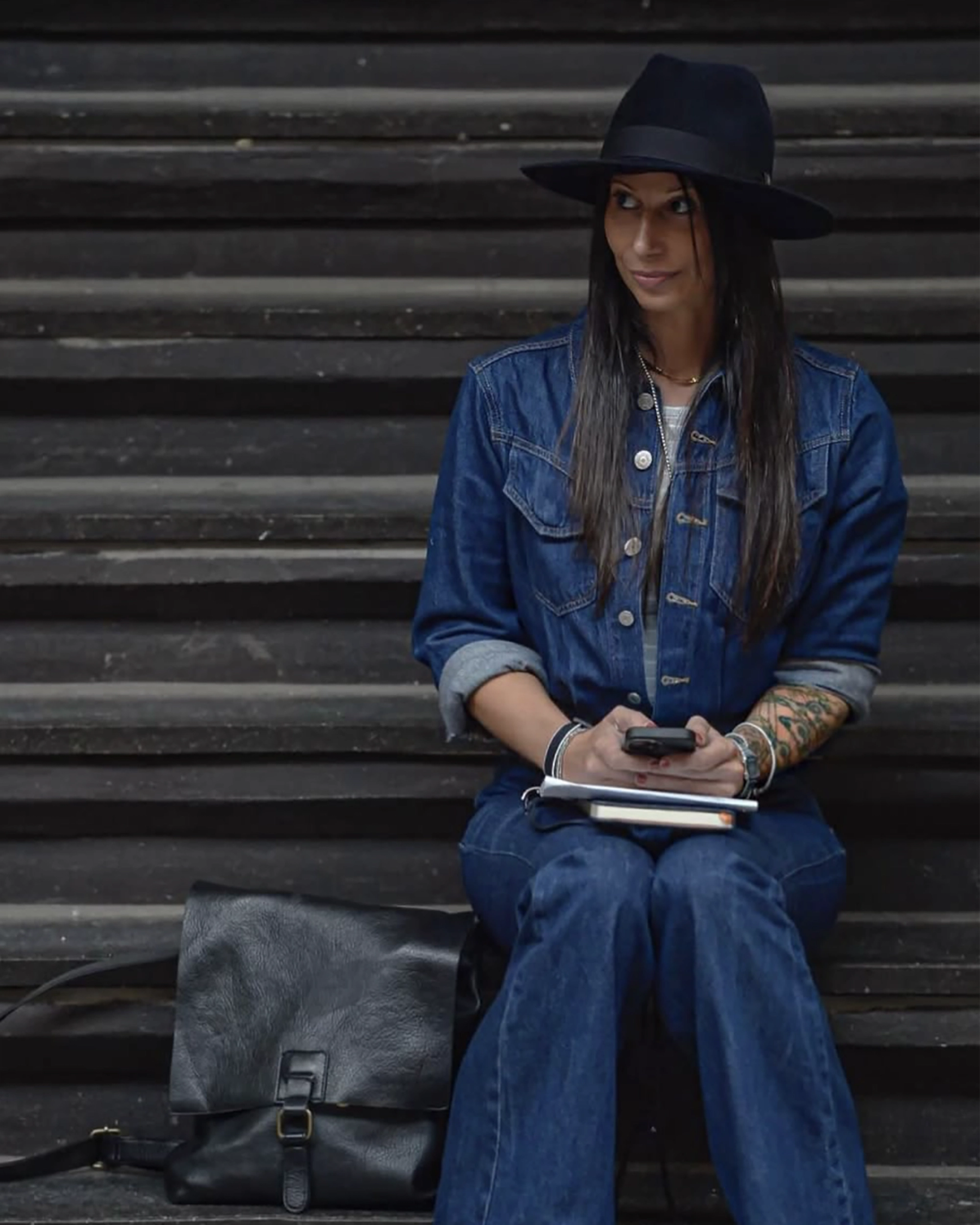
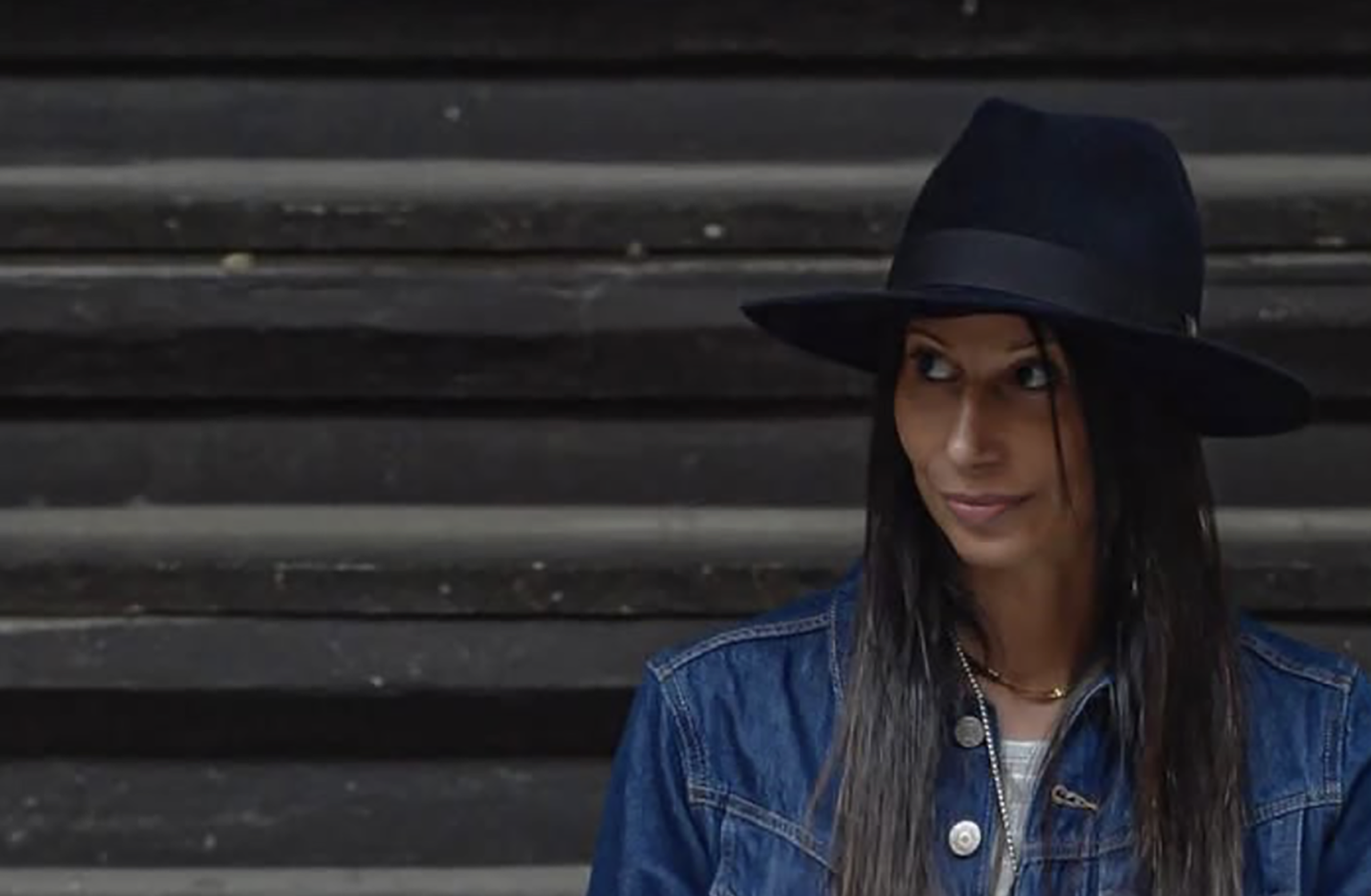
If you close your eyes and touch a fabric in the dark, you know instantly. You feel whether it is silk slipping through your fingers or a raw denim that holds its ground. For Serena Conti, stepping into a room is no different. A visual artist, an aesthete, and the vibrant counterpart to the scientific rigour of Cloakroom, Serena does not look at the menu. She reads the air.
“A well-tailored garment doesn’t overpower you; it doesn’t demand a ‘performance’, it sustains you. It allows you to stand tall without becoming rigid,” she observes. It is here, at this intersection of fashion and hospitality, that the soul of a great bar is defined. A space should not simply serve; it should make you feel you are exactly where you belong, with nothing to prove. “Welcomed, but not tamed. Free, yet protected.”
THE FAST FASHION OF THE GLASS
In an era where mixology risks dissolving into a mere Instagram feed, Serena applies the exacting standards of fine art to the glass. Her judgment is incisive, as sharp as a tailor’s shears. She draws a definitive line between art and superfluous decoration: “Superfluous decoration is mere noise. It may be pleasing, but it leaves no trace.”
She observes too much “Fast Fashion of the glass” today: excess devoid of identity, garish colours, and cluttered textures, an aesthetic that spoils instantly because it lacks vision. True elegance? It lies in the edit. “Much like a well-cut garment, you recognise quality by what has been left out, not by what abounds.” A drink must earn one’s attention, not beg for it. If conceived as a trend, it lasts a season. If conceived as a project, it endures.
THE DENIM METAPHOR: WEARABLE ARCHITECTURE
For Serena, contemporary Italian taste inhabits the same tension as a pair of jeans: a play of contrasts between authentic rawness (the heritage of craftsmanship) and a “modern patina” (aesthetic precision).
“Denim is a quintessential classic,” she explains. “It is composed of dyed warp threads and white weft threads. If a bar were pure technique, it would be a sterile lab coat. If it were pure aesthetics, it would be a paper dress that dissolves in the first rain.” The secret lies in the layering: accepting a scratched counter or a shifting idea as evidence that a space is alive. Do not domesticate the material; listen to it.
CLOAKSTUDIOS: WHERE COLLISION TURNS TO CONFLUENCE
There was a precise moment when this philosophy ceased to be theory and became brick, pigment, and steel: the birth of Cloakstudios.
Samuele’s initial vision was a perimeter of certainties, a professional, rigorous academy, a “theatre of operations” for the beverage world. Then came Serena. “I began pouring colour into every corner. I imagined walls turning into jungles, spaces that spoke of emotion rather than procedure.”
While Samuele mediated with logic, Serena countered with vivid, uncompromising visions. The friction turned physical over the budget for student seating: Serena diverted the entire fund into a throne and a plastic pouf visually arresting but technically “useless.” It marked the beginning of the end for the rulebook.
Shortly after, Samuele introduced a two-metre robot crafted from recycled metal. They clashed over its head, its form, its sheer presence. Yet, within this constant tension, the unexpected took root. Samuele began to experiment, pushing beyond the boundaries. Today, Cloakstudios is an ecosystem inhabited by Batman and Joker canvases, a thirty-metre dragon suspended from the ceiling, and anime figures at every turn. “Now I’m the one telling him to steady on,” Serena jests. “And naturally, we still argue.”
A GENTLE REVOLUTION
When the lights eventually dim and the glasses stand empty, what remains? Not the turnover, but what Serena calls the “aftertaste.”
“My dream is a gentle revolution. To prove that one can excel without turning callous.” Her goal is to leave those who work with her—and her son—not a recipe or a blueprint, but a clean sensation: the feeling of having engaged with life intensely, without exhausting the people within it. Because true atmosphere isn’t built with furniture alone. It is built with respect, the courage to clash, and the ability to conjure something together that neither could have ever imagined alone.