The date of October 24 carries an odd connection with pivotal moments in Italian and world history. Remember: we are not here to voice our opinions—which we could easily do sitting at a bar table—but merely to report “a fact.”
October 24, 1922: The speech in which Mussolini delivered his ultimatum to the liberal state (“Either they give us the government, or we will take it by descending on Rome”). Four days later (October 28), the March on Rome took place,followed by the establishment of the regime. October 24, 1956: During the Budapest uprising, on that very day Soviet Red Army tanks rolled into Budapest and opened fire on protesters gathered in front of Parliament and the state radio headquarters. October 24, 1917: Red Guards and sailors seized bridges, train stations, telephone exchanges, and telegraph offices, the prelude to the storming of the Winter Palace (St. Petersburg).
October 24, 1975: 90% of Icelandic women went on strike for an entire day, paralyzing banks, schools, factories, and transport.
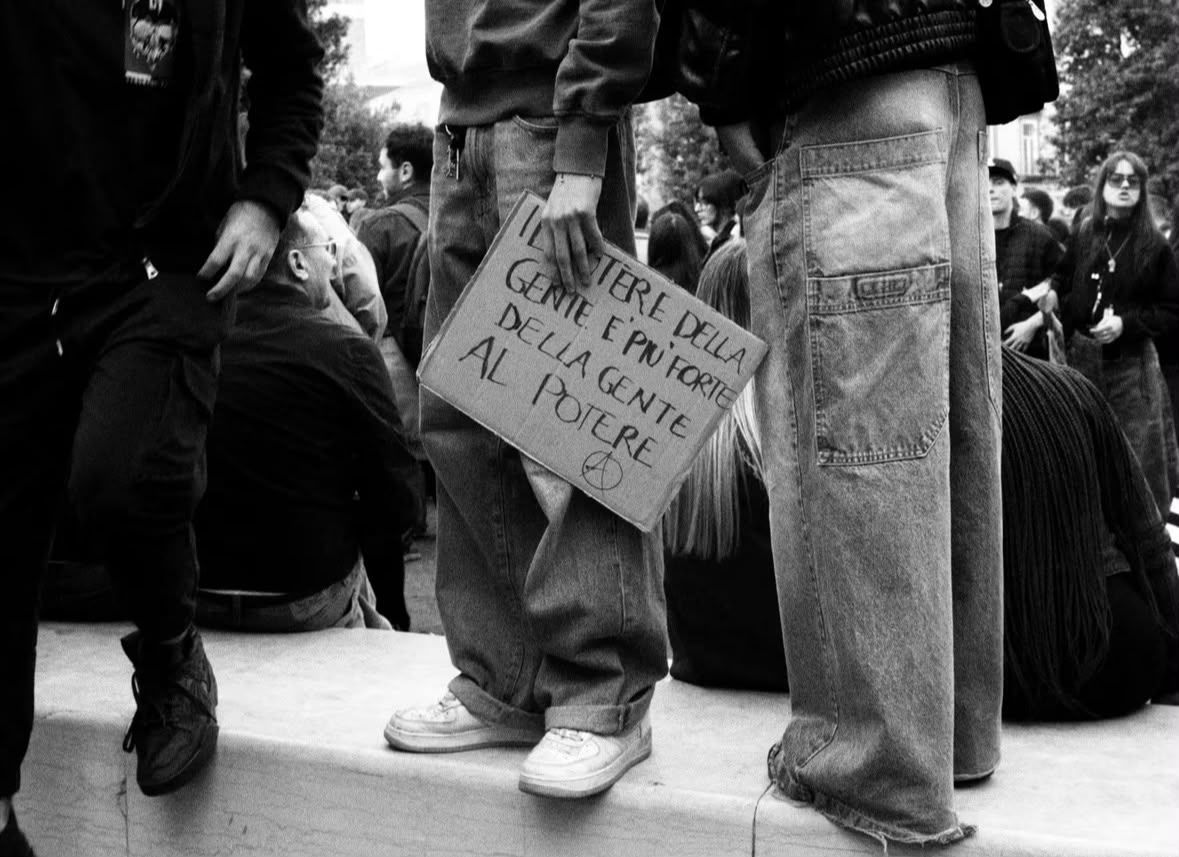
And now we come to our Constitution, which all of us should know because it is a fundamental pillar of our identity, even if we sometimes forget it:
“Citizens have the right to assemble peaceably and unarmed. No prior notice is required for meetings, even in places open to the public. For meetings in public places, prior notice must be given to the authorities, who may forbid them only for proven reasons of security or public safety.”
And to clarify further why we tend to dwell on this point:
Prior notice is not an authorization: In the Republican constitutional framework (a clean break from the Albertine Statute and the Fascist era), prior notice to the Questore (Police Chief) is merely an informative notification to enable safety management, not a formal request for permission. The absence of prior notice entails penalties for the organizers, but does not automatically make the dispersal of the march mandatory.
Explicit limits: The legitimate grounds for restriction or prohibition are restricted to two specific cases: weapons, or proven reasons of security and public safety.
Related articles: Article 17 is closely linked with Article 21 (freedom of expression) and Article 2 (inviolable human rights within social formations).
And now that we have dotted our i's and crossed our t's, we can also say that we, the Italians, are not historically a people prone to revolutions (and if you disagree, a solid review of Italian history might do you some good), but we are indeed ready—or at least some of us have been—to take to the streets to rebel against regimes, violence, and everything that does not belong in a democracy (and here too, a good history review would help).
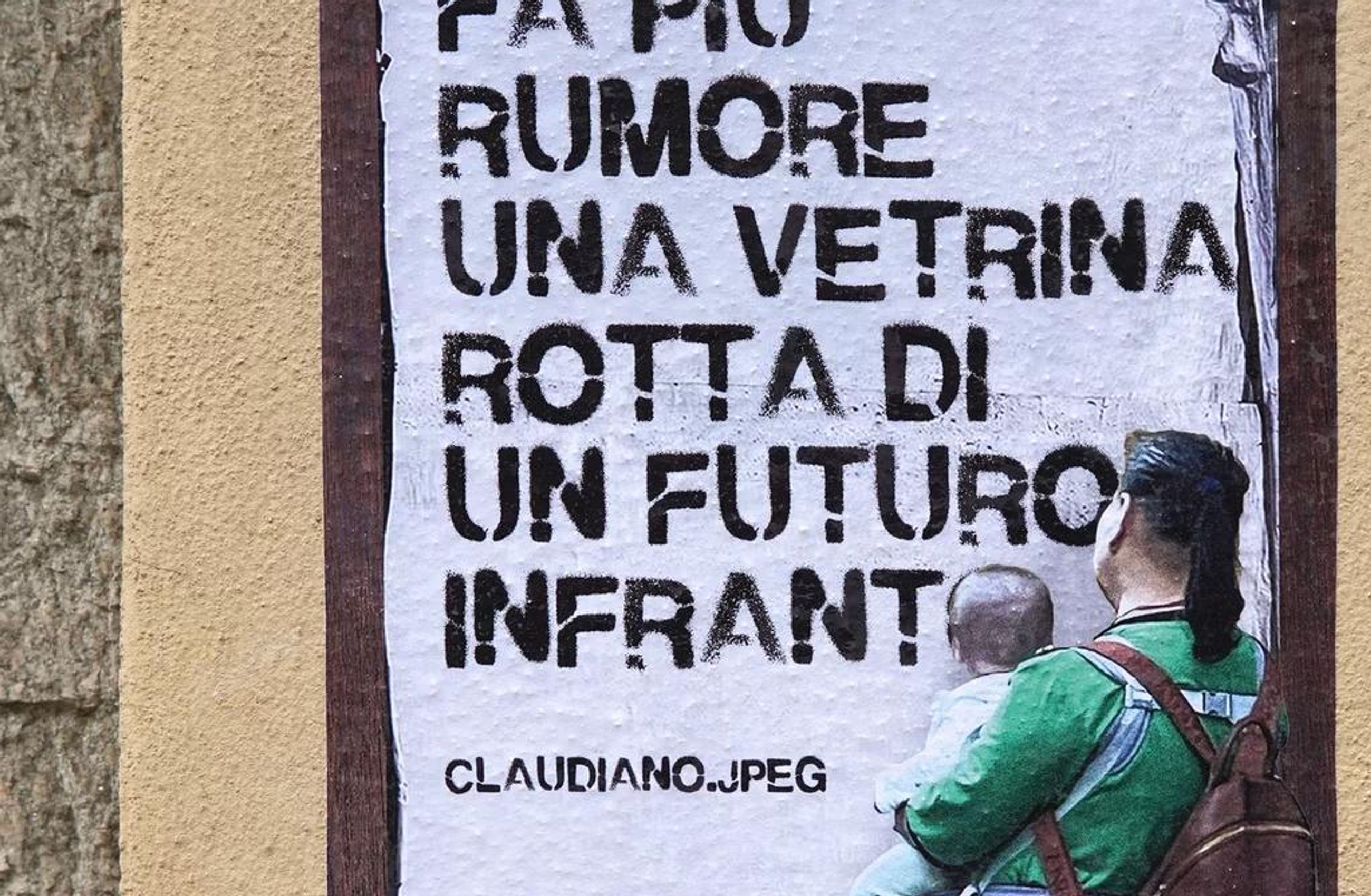
Yesterday, the squares made their voices heard once again; they made themselves heard despite the atmosphere of open conflict created during the previous demonstration. Because let’s remember: it was not the protesters who smashed storefronts and set parts of cities ablaze. Perhaps those criminal acts served to divert attention from the real issues and to delegitimize a right: the right to protest.
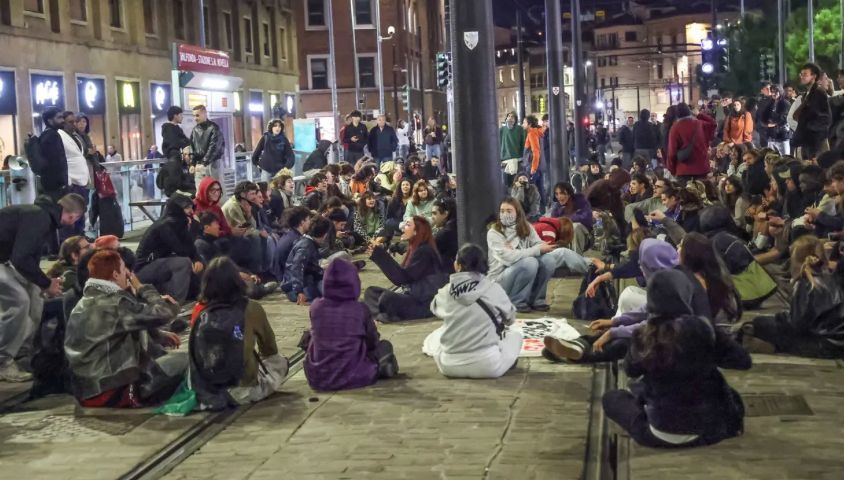
People can no longer make ends meet; people no longer see a future. At 24, you cannot survive on an internship paying 600 euros a month in a society where cities like Milan rent rooms for 800 euros a month. And since we like to deal with facts rather than opinions, we want to point out that Italy spends about 4.1% of its GDP on education, compared to an EU average of 4.7%. Countries like Sweden, Denmark, or Belgium hover above 6%. And when someone objects, saying:“Who told you to go waste time at university?”, one could simply reply: “Will you treat your illnesses yourself?”, and we certainly won’t go any further. We are the only advanced country (or so they call it) where real wages have fallen over the last thirty years (-2.9%), while in France and Germany they grew by more than 30%.
And now, since we like talking numbers, let us return to October 24, 2026.
371 people detained or brought into police stations across half of Italy. 110 minors. A figure that should startle anyone with an ounce of intellectual honesty, because it exposes a total generational disconnect between those in power and those taking to the streets.
9 arrests and 87 individuals formally charged while at liberty, alongside nearly 4,300 preventive checks carried out on the streets and in stations.
And what about the injured? Do the injured matter less than smashed shop windows simply because they chose to take to the streets and speak their minds?
In Bologna, emergency services intervened 17 times for gas intoxication,contusions, and a young man rushed to the Maggiore Hospital emergency room under code 2.
In Rome, dispersal charges,water cannons, and tear gas left protesters on the ground with head wounds treated on-site, alongside 28 preventive detentions and 96 individuals taken into custody.
A similar tense scene unfolded in Milan, where over ten thousand people brought the city around the Politecnico to a standstill, with moments of acute friction along Corso Venezia.
In Bologna, an ambulance attempting to aid an injured person was blocked directly in the path of the water cannons and enveloped in dense tear gas. High-pressure water blasted the paramedics who were trying to save a life. This is not an attack on law enforcement; it is simply laying the other side of the coin on the table, because it seems public television and the press are forgetting something.