Hahaha… brother, I have to start with a big laugh! Is that a question or a provocation?
Truth is, I like the question, because you and I have talked about this topic so many times. And we’ve almost always agreed. Not so much on whether rankings should exist or whether certain bars deserve to be on them—that’s a separate conversation. What we’ve questioned time and again is where this concept of "the list" is taking our industry and what kind of culture it’s helping to create.
When you say that my partners at Jerry Thomas and I were among the first to work with that international network, you actually catch me a bit off guard. We never worked for that network. Our story was different.

We focused on education.
It might seem like a subtle distinction, but to me it’s massive.
Since 2002, Leo, Antonio, and I started training and educating, and after more than twenty years, it’s still the absolute core of our work. The way we do it has evolved—today it’s more specialized, more deep-dive. Take, for instance, the educational path we run together on Mexican spirits. But the underlying principle has remained identical: study, share, and pass knowledge around.
When I look back at those years, I don't see a network built for visibility. I see a web of human connections. Curious people who were hungry to learn and felt a genuine need to exchange ideas.
We brought in professionals from abroad back when certain things weren't even known in Italy yet. We organized meetups, tastings, seminars. A few guest shifts, sure, but that wasn't the point. The point was to create a place where people could debate until three in the morning about an ingredient, a technique, the history of a cocktail, or the fermentation process of a spirit.
Those were nights spent inside a bar, with open bottles everywhere, notebooks filled with scribbles, and an endless curiosity.
We laughed a lot, we drank, we spent time together, but no one felt the need to stand on top of a bar counter, wear a costume, or take a shot straight from the bottle to prove a point. The focus was entirely on the substance.
When I think about that era, I smile.
There were people like you, Patrik, and so many other bartenders who have gone on to write important chapters in Italian bartending. Back then, nobody talked about personal branding or algorithms. We were simply building—almost without realizing it—a shared culture.
And that is perhaps the very reason why I find it hard to feel responsible for what came afterward.
If anything, I feel responsible for having helped build a community. For that, yes—and I’m proud of it.
What happened next, on the other hand, was the result of a much broader shift—one that impacted society as a whole, not just bartending.
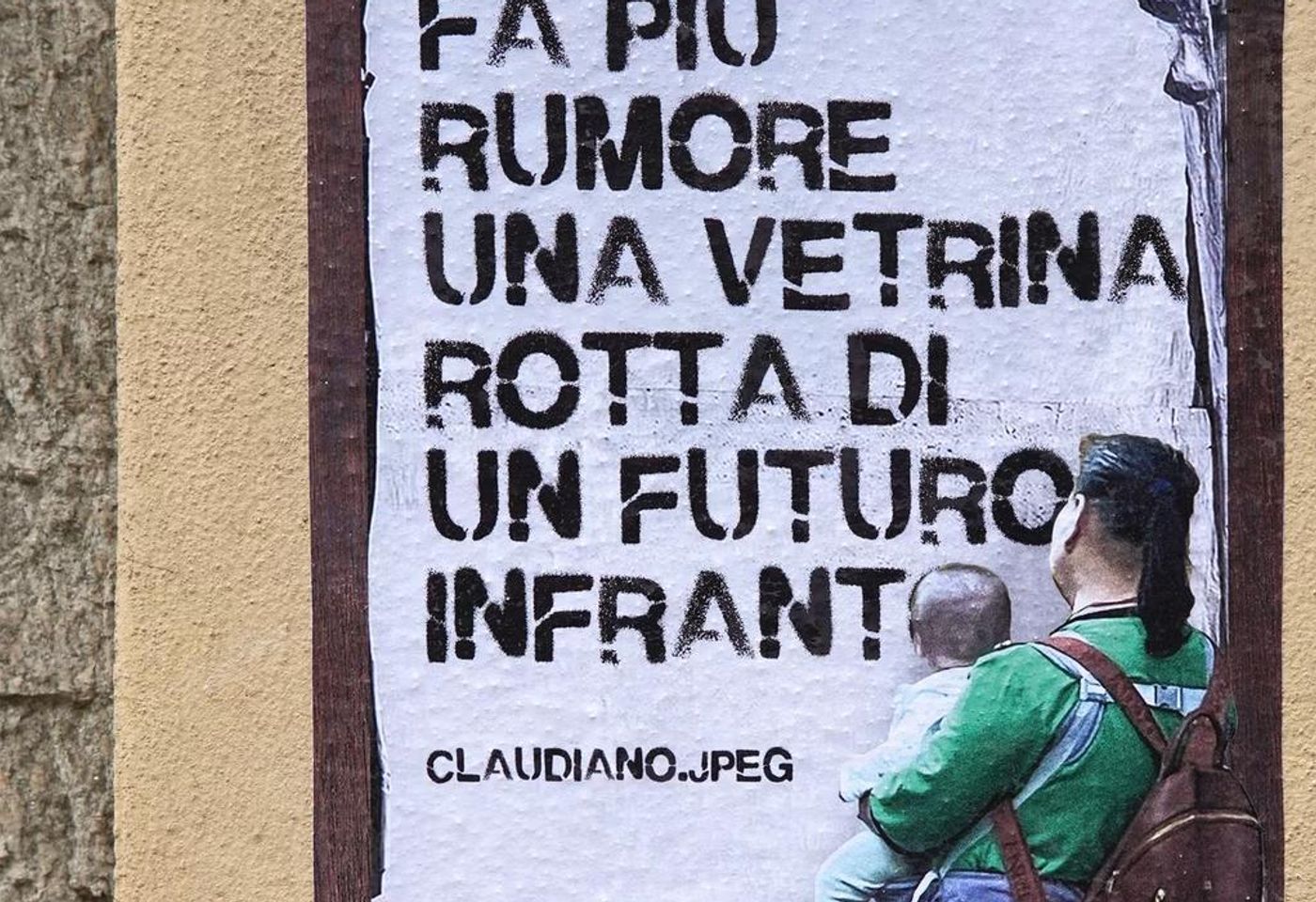
The arrival of social media profoundly altered the way our craft is communicated. At a certain point, research began giving way to appearances. Deep study was replaced by marketing. A professional’s worth started being measured by follower counts, likes, and shares.
Now, don't get me wrong: I’m not saying social media is evil. It’s an extraordinary tool. The problem arises when the tool becomes the end goal. When you do something not because you believe it carries value, but because it will perform better in a thirty-second video.
Hand in hand with this, figures who previously didn't exist entered our industry: social media managers, PR agencies, marketing consultants, lifestyle magazines. Important roles, let’s be clear. But in some cases, they became the ones dictating what was interesting, what deserved attention, and what didn't. It’s as if the narrative of bartending ended up in the hands of people who, often, only knew bartending from the outside looking in.
And that, inevitably, changed the rules of the game.
You know very well what happened to us with La Punta. An Indian agency tied directly to the rankings scene reached out to us. They invited us to do a guest shift in India, but on one condition: that we reciprocate the invitation.
That exact logic is what makes me uncomfortable.
Not the cultural exchange. The exchange of visibility.
The idea that everything must be converted into a bargaining chip for exposure.
We chose to say no. We probably gave up a few photos, a few likes, and maybe even a few spots on a list. But we kept the freedom to choose why we travel.
Because you and I have always been nomadic spirits. We spent our own money to get to know people, regions, and cultures. We don't want to collect stamps on our passports. We want to learn.
And look at how many incredible places we’ve discovered that way: Café de la Paix in Paris; the Dutch genever bars; the Genever Museum in Schiedam. And then that day at La Capilla, when we met Don Javier, the creator of the Batanga.
A man who never needed to chase the world because the world came to him, right inside his small bar. That encounter taught me more than countless conferences ever could. Because certain people remind you that a place’s worth isn't born from the number of photos taken inside it, but from the stories it leaves within those who pass through its doors.
That’s why I keep thinking that not all is lost. Far from it.
In recent years, I’ve found huge renewed enthusiasm by stepping into small provincial bars, into the outskirts of big cities—places that will likely never end up on an international ranking.
There, I meet young men and women who are truly studying. Who are tasting. Who are reading. Who are doing real research. Who build an identity by thinking first about the human beings who walk through the door every evening, and only second about the image they present online.
That, to me, is the future.
Many of them legitimately dream of making it onto a list. And I wish them well. But I hope they never forget that there is a far more important list.
It’s the list of returning customers.
The list of people who choose your bar counter to celebrate a milestone, to talk through a problem, to fall in love, or to reconnect with an old friend.
That list doesn't get published once a year. It’s built every single night. And maybe, it’s the only one that truly lasts.
So, if you ask me whether I feel responsible, this is my answer: I feel responsible for having helped build a culture of sharing. I feel responsible for having passed on curiosity. I feel responsible for having believed that a bartender should be, above all else, a student and a craftsman.
If a portion of that culture was later turned into a rat race for clout, metrics, and rankings, I believe that belongs to a different story altogether.
Ours—at least the way we always envisioned it—was something else entirely.
And I still hold onto a small dream: That regardless of rankings and fleeting trends, Jerry Thomas will be remembered for what it truly was: the place where four Italian bartenders brought Professor Jerry Thomas back to life and proved that a bar can be, first and foremost, a workshop of ideas, education, and culture.
If one day Jerry continues to thrive under a new generation of young bartenders who still want to study, share, and put knowledge ahead of appearances, then I’ll know that everything we did truly meant something.
I’d like to close with a thought rather than advice: Let's take back our bars. Let's reclaim the right to decide what they stand for, without letting outside industries dictate the value of our work. A bar shouldn't be run by algorithms, marketing strategies, or the pursuit of clout, but by the people who live inside it every single day.
Let's get back to talking about hospitality, culture, study, and sharing. Because if the bar belongs to the bartenders and their guests once again, then our entire industry will start growing in the right direction.
And now
Hi Livio, a while ago we had a great chat and, reflecting on that conversation, you immediately came to mind. You're a young bar owner, but also a musician, and I think it's interesting to see how these two worlds coexist in your life.I'd start right with your dreams: looking around today, do you feel you've managed to achieve them in some way?Because both the world of nightlife venue management and the world of music have changed quite a bit. There are social media, marketing, charts, the need to build an identity, to make yourself known... In short, today it seems that simply doing well what you do is no longer enough.Having chosen to open a bar, how much do you feel this pressure? What do you think are the biggest difficulties in opening and running a venue today? Is it necessary to adapt to everything that revolves around social media and marketing in order to stand out, or do you still believe that having a good idea, doing your job well, and waiting for people—perhaps curious to discover something new—to find you can be enough?And perhaps the same applies to music. As a musician, what is your relationship with this shift? Would you still like the somewhat romantic idea of going to play in small local venues (Seattle😂), experiencing the music scene, and maybe becoming a rockstar? Or does the musician's dream today inevitably pass through Instagram, videos, followers, and the need to build an audience?In the end, it seems to me that, both in the bar industry and in music, the underlying theme is always the same: how much space is there left to simply do what you love, and how much, instead, do you have to learn to tell its story and sell it to others?